
News Insights
HISPANIC HERITAGE MONTH 2024
Our Existence and Actions as Hispanics and Latinos, Here and Now.
Every year, between mid-September and mid-October, around October 12, known as the Day of the Race or the Discovery of America, or – better – as the meeting of the European and American worlds, we celebrate HISPANIC HERITAGE MONTH in the United States of America. This celebration began in 1968 with a Hispanic Heritage Week under President Lyndon Johnson. Then, it was extended to a month and approved into law on August 17, 1988, during the government of Ronald Reagan.
Annually, HISPANIC HERITAGE MONTH celebrates and thanks the Hispanic American community for its cultural and material contributions to the progress and development of this great Nation. At the same time, HISPANIC HERITAGE MONTH is a magnificent opportunity for the U.S. Hispanic community to rethink, beyond parades, our presence in this country, revisit our early dreams and illusions from when we came to this Nation, and recommit to new paths that – here and now – lead us to better achievements for the common good and for the well-being and future of the generations who will follow us.
In the last three decades, on various occasions and through different means, I have shared my concerns about the challenges facing the Hispanic community in the United States and its struggles to achieve full integration into this North American society and to have its contributions – of all kinds – to the life of this Nation recognized and justly valued.


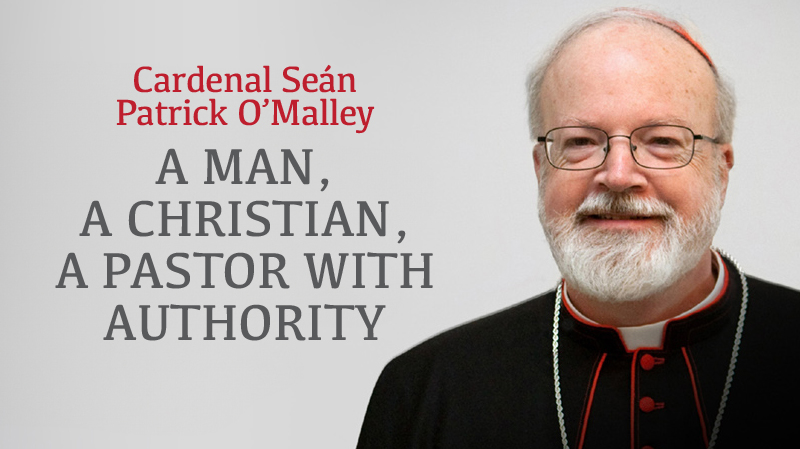
A MAN, A CHRISTIAN, A PASTOR WITH AUTHORITY
“The people were astonished at his teaching, for he taught them as one having authority and not as the Pharisees.” (Mk 1:22). Like this passage, there are several testimonies in the New Testament about the admiration that Jesus of Nazareth inspired in his time and with his people, because he lived, acted, and taught with authority, unlike the teachers of the law and the Pharisees who – hypocritically – “do not practice what they preach” (Matthew 23:3).
Hypocrisy is the greatest cause of today’s evils and authority, the greatest urgency of humanity in our time. We have a pressing need for men and women who, in all stages of life and all social instances, live with authority, with coherence between deeds and words. We need men and women who do what they say, do what they command, live what they believe, and practice what they preach.
Within these lines, I will tell you about an authentic disciple of Jesus of Nazareth, a man of authority and my friend, the current Archbishop of Boston, Massachusetts, Cardinal O’Malley, OFM Cap. whose episcopal motto on his coat of arms reads: “Quod cumque dixerit facite” which, translated into English, means: “Whatever you say, do it!”
Rediscovering the Role of the Family Doctor Confirms the Right to Healthcare
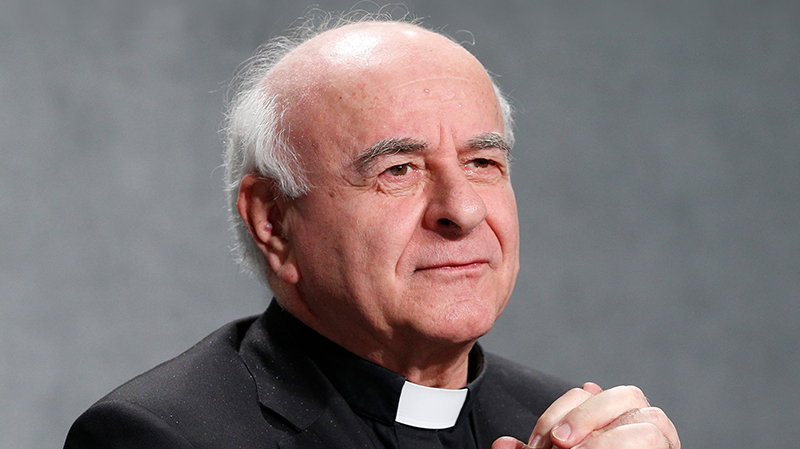
We publish the speech by Archbishop Vincenzo Paglia, President of the Pontifical Academy for Life, in the video addressed to the participants in the international conference, "Thank You, Doctor!", held in Rome on May 24.
* * *

2024 Golf Outing
Join us for the 2024 Dr. Ramon Tallaj Golf Outing at the beautiful Brooksville Club in NY! 🌟🏌️♀️ Mark your calendars for July 7, 2024, and tee off with us at 10 AM for a day of fun, networking, and friendly competition. Whether you're a seasoned golfer or just looking to enjoy a day outdoors, this event promises great company, scenic views, and a chance to support a wonderful cause. Don't miss out on this fantastic opportunity – RSVP now and get ready to swing into summer! #DrRamonTallajGolfOuting #GolfForACause #BrooksvilleClub

Thank you, Doctor!
For a decade now, SOMOS Community Care, a New York City-based medical organization comprising more than 2,500 primary care physicians and their clinics, has worked and advocated for the important social role that the family doctor must once again play in the field of health and life care.
The primary care physician, or general practitioner, has long played a significant part in the health of families and society. The family doctor served this function by preventing and caring for the nuclear family, relying on their knowledge of its members, the closeness and trust of the patient-doctor relationship, and the advantages of knowing their culture and language.
In recent decades, this medical role has been both disdained and belittled. Scientific and technological advances, the proliferation of health insurance institutions, medical specializations, the profit motive, political interference in health systems, the bureaucratization and automation of medical services, etc., have impacted the critical and irreplaceable role of the family doctor and their personal relationship with the patient.
Bread and Peace, and Their Meaning for Easter
In the Catholic liturgy, on Saturday of Holy Week, we stand in prayer and silence at the tomb of Jesus. At midnight, we celebrate the Easter Vigil. While the Jewish people have celebrated and continue to celebrate Passover, as the date of the Exodus from Egypt and the “passage” through the Red Sea, we Christians celebrate Easter as the most important event in believers’ lives: the resurrection, “passage,” the new birth (Jn 3:1-18), and the renewal of the mind (Rom 12:2-3). We celebrate new life, living according to God’s ways and logic, and the transformation of life that those who encounter Christ have experienced and are experiencing today.
The Spanish words “Pascua,” meaning “Easter” in English, and “Paso,” meaning a “passage,” represent the new life by which we Christians confess the Crucified Risen One, Living among us, Lord of Life and history. They represent the new and abundant life (Jn 10:10) founded upon the fact that we can now live the same life as Jesus, no longer as slaves, but as children, calling God: “Abba!” Father (Gal 4:6) and loving each other as brothers and sisters. For in this, we know that we have passed from death to life, in which we love our brothers and sisters (1 Jn 3), to the point of crying out, as Paul did: “It is no longer I who live, but Christ who lives in me.” (Gal 2:20).
After Jesus died, the lives of his first disciples transformed. They were never the same again. They attributed this transformation “to the one who was hung on a tree” (Acts 4:10), to the Crucified One. For if the dead man changed our lives, it is because he is alive and has risen. This is a transformation, a new life, for which he is confessed to be the Living and the Risen One. Since then, the best proof of Christ’s presence as Living and Risen in the world has been made by men and women with a new life, living the same life that Jesus of Nazareth lived and taught, loving and serving all.
An Invitation Open to All
In the Catholic liturgy, “Holy Week” is the most important week of the church year. During Holy Week, we commemorate the main events in the life of Jesus of Nazareth: his passion, death, and resurrection, which - at the same time - constitute the events by which his disciples believe that, following Jesus Christ, we achieve our own salvation and our own full, abundant, eternal, and happy lives.
Holy Week opens with Palm Sunday, when we commemorate Jesus’ arrival in Jerusalem, celebrated by the people with cloaks and olive branches as “the one who comes in the name of the Lord.” (Mk 11:9-10) This is the same city and the same people who, days later, will witness and become accomplices in the condemnation of the innocent Jesus and his death on the cross.
During this same week, Thursday, Friday, and Saturday are three days known as the Paschal Triduum. On Holy Thursday, Christians commemorate the Supper-Testament and farewell of Jesus, when he provides an example of a new way of exercising power by serving and washing the feet of his disciples (Jn 13). He then leaves us one new law for his disciples: the commandment of love. This is a love that springs from the recognition of God as Father and of all of us as brothers and sisters. This is the love with which his disciples are called henceforth to establish all their relationships and will be the “sign” that they are Christians (Jn 13:35).
Surprise! The Pope Knocks at the Door
The documentary, produced by Rome Reports, delves into the impact of Pope Francis' numerous personal encounters. Individuals who have been visited in their homes, in prisons, or nations ravaged by conflict, share how such encounters have transformed their lives.
"Surprise! The Pope Knocks at the Door" has been made with the support of the Doctor Ramón Tallaj Foundation of New York, whose president traveled to Spain for the presentation of the documentary.
Don't miss the opportunity to see it on Univision this Saturday, March 30 at 12:00 noon.
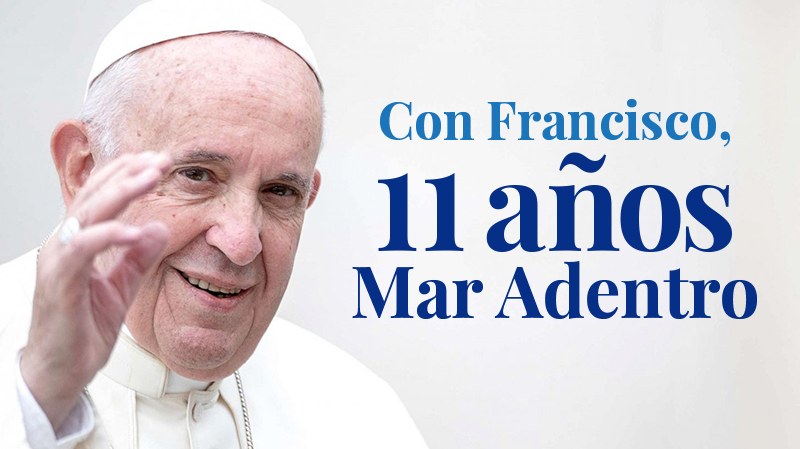
With Francis, 11 Years “on the High Seas”
On March 13, 2013, the conclave of cardinals gathered for the election of a new Pope, elected Jorge Mario Bergoglio, then-Cardinal of Buenos Aires, Argentina, who chose FRANCIS as the name for his pontificate, in homage to the saint of Assisi, the “poverello” (the poor little one). It is a name that has helped shape his profile and the course of his life and teachings during these years of his Petrine ministry.
During these days, we now celebrate the eleven years since Francis became the first Jesuit and Latin American pope to direct the destiny of the Church, guide Catholics in their Christian faith, and the Vatican as its head of state.
Francis, a Pope of Surprises
In 2023, the Church celebrated the remarkable 10th Anniversary of Pope Francis' Pontificate, marking a significant milestone in the Church's two-millennium history. As the first Latin American pope, Pope Francis has distinguished himself over the past decade through a unique blend of Jesuit principles, Latin American cultural influences, and the compassionate spirit of a good shepherd. This documentary beautifully captures the profound connection that the Holy Father shares with the most vulnerable members of society, showcasing how he serves as an inspiring figure for people around the world. Through his humility, impactful gestures, and enlightening teachings, Pope Francis has been a refreshing breeze and a guiding light for everyone, offering solace and wisdom during the challenges and uncertainties we all encounter.
All new for new year
The beginning of a new year provides the opportunity to renew ourselves. With good intentions and promises of change, we turn the page at the end of the year and start a NEW. We make these goals and intentions within the context of our personal, family, and social realities.
Our national, international, and global realities require us to leave behind our petty individual interests and peer outside our windows so we can contemplate a humanity that is hopeful, expectant, anguished, and troubled; a humanity that awaits improvements, changes, and solutions.
Our current moment is marked by difficulties, severe and significant problems, gaps, and inequities that afflict us, interest us, affect us, and distress us, such as the destruction of the environment that manifests itself in ecological disasters and global warming, wars on our world’s different fronts, the threat of wars that will escalate worldwide, the terrifying possibility of the use of biological, atomic, or nuclear weapons.