Stella Maris Mission 2026: Transforming Lives on the Banks of the Ozama
Friday, 24th April 2026
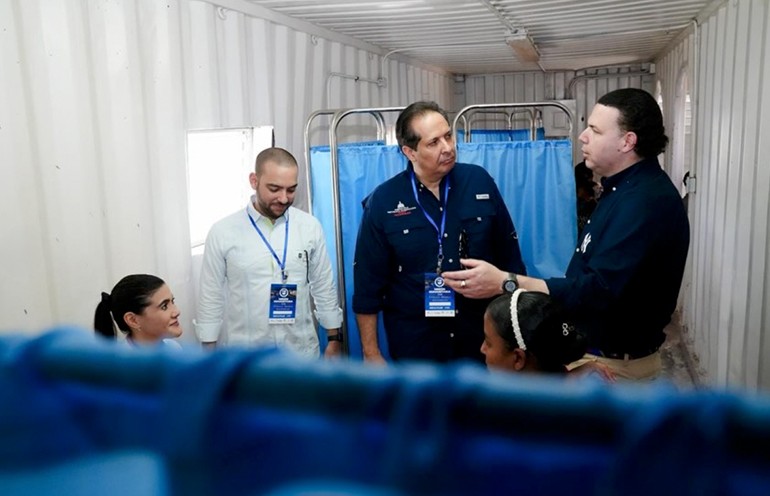
The impact of the Stella Maris 2026 Humanitarian Mission in the El Dique sector, on the banks of the Ozama River, transcends cold statistics to emerge as a living testimony of love, respect, and absolute dedication to others. Under the profoundly humanistic vision of the Dominican Medical Dental Society (DMDS), an organization founded in 1977, and with the fundamental support of SOMOS COMMUNITY CARE and Dr. Ramón Tallaj, an army of seventy volunteer doctors and specialists from New York embarked with a single sacred purpose: to restore health and dignity to those most in need. This undertaking, which had the encouragement and spiritual support of Bishop Manuel Ruiz and the backing of the insurance company HEALTHFIRST, not only delivered a massive medical impact, but also became a hopeful embrace for a community that bravely fights against poverty and oblivion on the margins of Dominican modernity.
Over five days of tireless work, from Monday, March 9, to Friday, March 13, 2026, these health professionals transformed the daily reality of thousands of families, demonstrating that medicine reaches its fullest potential when it detaches itself from commercial interests and serves human well-being. Logistical efficiency formed a pillar of this charity: from the first contact in the orientation area, where 3,985 citizens were welcomed with a smile and patiently guided to the appropriate specialties, to the rigorous medical triage process that evaluated 2,204 people under the expert direction of specialists such as neurosurgeon Dr. Amaury García. Every action, no matter how small it seemed, was imbued with a deep sense of service and the recognition that each patient is a human being with a story that deserves to be heard and healed.
The mission offered comprehensive coverage, making clear to El Dique's inhabitants that their health is a priority. Services were provided in adult medicine, pediatrics, gynecology, cardiology, and dermatology, ensuring that physical ailments received the highest quality treatment available. The technological and human deployment made it possible, even in an environment of social deprivation, to practice medicine of excellence.
However, it was the work done in the dental department that etched the most visible traces of transformation. In a titanic effort, the dental team treated a total of 7,130 patients. This figure reflects not only the magnitude of the need but also the heroic dedication of the dentists and technicians who worked overtime to ensure no one went without care.
In the mobile dental clinics, we saw immediate relief from physical suffering. The oral surgery department performed 3,339 extractions, freeing 1,297 people of the infections and chronic pain that affected their quality of life and ability to work. But the work did not stop at eliminating pain. It also focused on reconstruction. The restoration department performed 2,761 fillings, saving vital teeth and educating patients on the importance of preserving their natural teeth. This preventive and curative approach is a sign of the respect volunteer doctors have for their patients' physical integrity, treating them with the same dedication they show in their private practices in the United States.
One of the most moving and significant moments of the mission was, without a doubt, the prosthetics team's work, coordinated by Adhrian Hernández and Dr. Mayra Gómez. For a human being, losing teeth means much more than difficulty eating; it represents a loss of identity and self-esteem. By delivering 987 prostheses, including total and partial dentures, the mission gave back to hundreds of older adults the ability to feed themselves with dignity and, above all, the priceless gift of smiling again without shame. The tears of gratitude of those who looked in the mirror and saw their image recovered are the purest testimony of the day’s success. It was an act of social justice that restored functionality and joy to those who had been robbed of almost everything by life.
The mission also looked ahead with tenderness towards the nation's future: its children. Under the direction of Dr. Yanina Frías, the pediatric dentistry department treated 445 children under 12 years of age, providing cleanings, sealants, and fluoride treatments. But beyond clinical treatment, each child received a lesson in self-love through oral hygiene education. By handing out cleaning kits and teaching them how to care for their health from an early age, volunteer doctors planted a seed of prevention that will flourish into a healthier generation. This educational effort, led by Dr. Astrid Hidalgo, hygienist of the Dominican Medical Dental Society, was extended to all patients, including vital talks on nutrition and addiction prevention, reinforcing the idea that health begins with knowledge and personal empowerment.
The success of this humanitarian operation was made possible by an exemplary leadership structure. Names such as Dr. Pedro Castillo, president of the DMDS; Dr. Juan Tapia, mission coordinator; and Dr. Hanette Gómez, general coordinator of the dental team, became synonymous with efficiency and compassion. Behind them, a logistical and support team, headed by Dr. Shariff de los Santos and Ramon Tallaj Ureña, including technicians, supply managers, and security personnel, worked in perfect harmony to ensure that each resource reached its destination. The hospitality of the Diocese of Stella Maris provided the necessary refuge for this miracle of solidarity to occur, demonstrating that the union between faith, science, and institutional will can move mountains of indifference.
At the end of the day on March 13, the landscape of El Dique was not the same. Thousands of people returned home not only with their ailments relieved, but with the certainty that they were not alone. The Stella Maris 2026 Mission leaves a legacy that cannot be measured only in numbers, but also in restored dignity and in the strengthening of community spirit. The seventy doctors who crossed the ocean to serve left much more than medicines in the Dominican Republic; they left an example of what it means to be a health professional with a social conscience. This work praises the very essence of service to those in need and reminds us that, in an often indifferent world, solidarity remains the most powerful tool for transforming human lives.