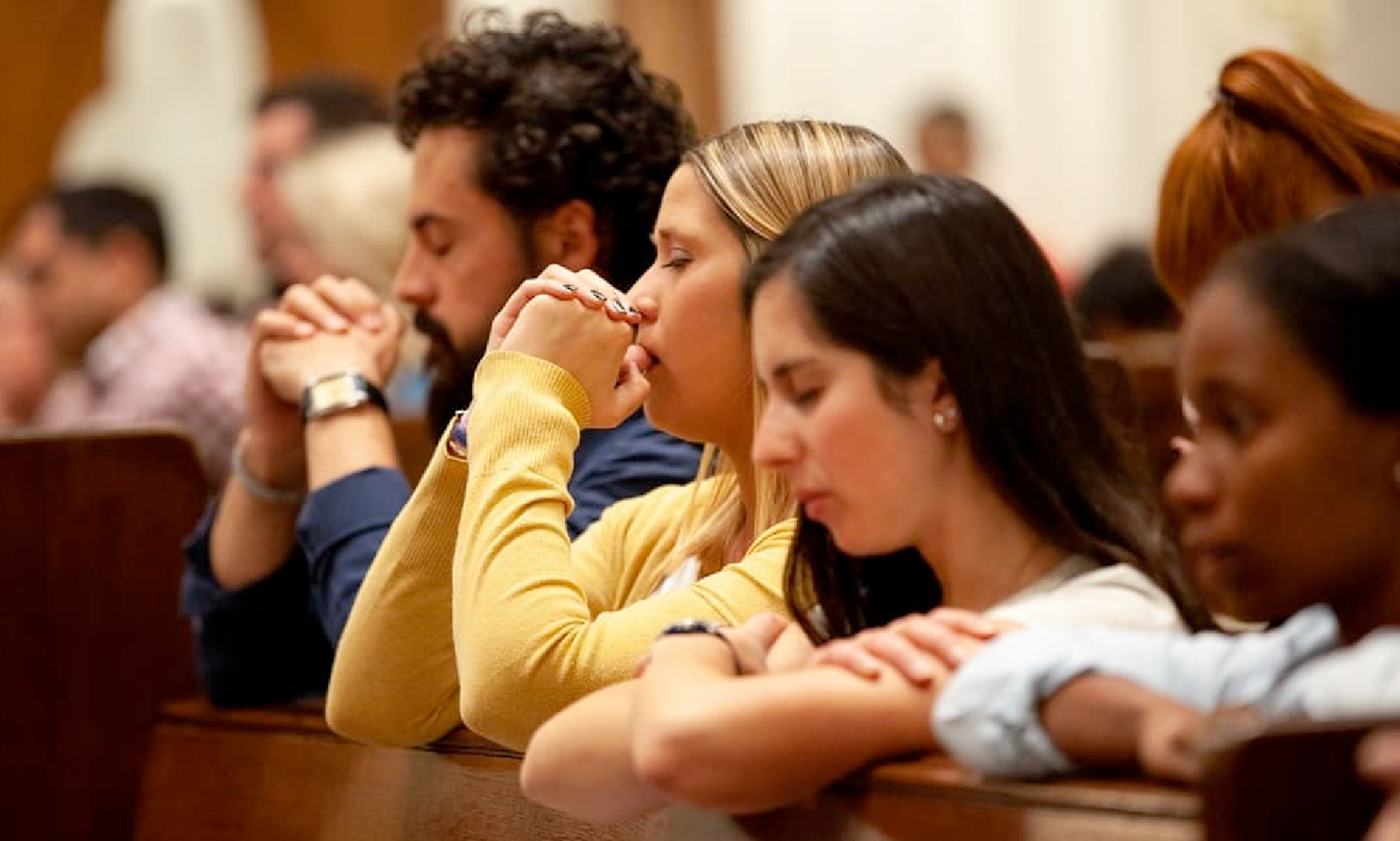
To be Catholic means to be in a relationship with a living God who reveals himself to us and invites us to love our neighbor in a special way. It implies belonging to a mystical body, the Church, whose very nature is to break down boundaries and embrace the totality of human experience. Historically, Catholicism has demonstrated a unique capacity for inculturation, the process by which the Gospel is incarnated in a culture not by destroying its legitimate values, but rather by elevating them. The Christian mystery of the Incarnation validates the importance of local cultures, so that a member of the Church does not renounce their earthly roots by embracing the faith, but finds in that faith the tools to love more deeply their own reality and that of their brothers and sisters.
If Catholicism means universal openness, Hispanic culture is among its richest and most passionate historical and cultural manifestations. We cannot understand Hispanic identity if it is divorced from its Catholic substratum, because, dating from the consolidation of the Iberian kingdoms, the culture, language, art, literature, and social structure of the Hispanic world have been forged in the heat of liturgy, theology, and mysticism. When this heritage crossed the ocean, its arrival in the Americas did not result in a mere replica of medieval Europe, but rather a deeply spiritual cultural blending. These major popular devotions, the architecture of the missions scattered across the continent, and the community structures all grew out of this shared cultural root. To be Hispanic is, therefore, to inherit a worldview where the sacred and the everyday walk hand in hand, and where concepts such as family, solidarity, honor, the dignity of the person, and, above all, the spirit of the community are intimately linked to a Christian anthropology, bringing to Catholicism an indispensable warmth and community mysticism.
Finally, we must redefine what it means to be an American, even more so today, as we approach the celebrations marking this great nation’s 250th anniversary. Too often, attempts have been made to reduce American identity to a rigid, homogeneous cultural mold, with strictly Anglo-Saxon, puritanical, and individualistic roots, assuming any other influence is alien or secondary. However, the true nature of the United States is its multicultural character, its history built on the basis of encounters, migrations, and fusions, where diversity is not a threat to the nation, but the engine that drives progress.
The United States was born and grew as the land of opportunity and welcome. Therefore, preserving ancestral traditions, practicing the family faith grounded in unity, and speaking one’s native language are in no way at odds with being patriotic or with being an exemplary citizen of the United States. On the contrary, the dynamism of this country is nourished by that melting pot of cultures, and contributions to the development, history, and deep identity of the United States have historically come, very significantly, and long before its founding as a republic, from Hispanic and Catholic hands that shaped the nation's South and West. Being an American does not require a cultural vacuum or blind assimilation that erases the past, but a willingness to bring one’s cultural richness to the good of ordinary society.
When we put these three vectors together in the context of the United States, we discover a dynamic interaction that produces an exceptionally robust and balanced citizenry. Catholicism elevates Hispanic culture and American culture by offering a universal moral compass and a dimension of transcendence that balances the pragmatic materialism or extreme individualism sometimes present in American culture.
In turn, Hispanic culture gives a more human and lived expression to Catholicism in the United States, contributing the warmth of its language, the central role of family, a strong community life, and a profound concern for society’s most vulnerable members, revitalizing parishes and schools across the nation. Finally, the institutional and cultural framework of the United States expands and challenges Catholicism and Hispanic culture, providing an environment of religious freedom, pluralism, resources, and an entrepreneurial push toward the future that allows faith and culture to bear fruit in a democratic, competitive, and missionary environment.
For all the above, we must firmly and intelligently attack the exclusionary notion that there are unbridgeable chasms between being Hispanic, being Catholic, and being a citizen of the United States. Those attempting to divide these elements or present the Hispanic-Catholic heritage as something “foreign” usually do so from biased perspectives that seek to weaken the social fabric, falsely pretending that to be a good American, you must assimilate to a single cultural standard and forget the faith of your parents.
There is no contradiction at all. All of us who proudly assume our Catholic faith, or honor Hispanic cultural heritage, and serve the United States with loyalty and commitment, do not do so by dividing our hearts, nor by living a fragmented identity. On the contrary, we are embodying the true spirit of the national motto,** E Pluribus Unum** (Out of many, one), demonstrating the possibility of being deeply Hispanic, fully Catholic, and proudly American, thus contributing to the richest, most harmonious, and strongest version of what this great nation is called to be in the world.